5 Things Beginners Should Know Before Starting Binary Options Trading
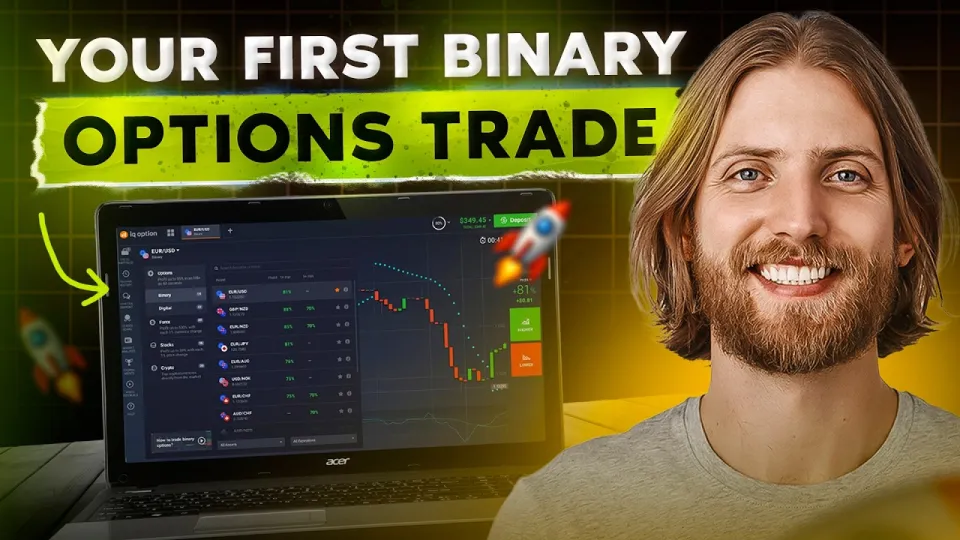
Video: Binary Options | Binary Options Tutorial for Beginners | Where Should You Start?
Key takeaways
- A binary option is an all-or-nothing contract: you either collect a fixed payout (typically 70–90%) or lose the entire stake.
- Break-even win rate depends on payout: at 80% you need to win more than 55.6% of trades just to stay flat.
- 60-second and 5-minute expiries behave like coin flips; longer expiries give price action time to play out.
- Demo accounts on Quotex, Pocket Option and Binarium let you test a strategy with zero real risk.
- Risking 1–2% of the account per trade keeps a normal losing streak from wiping out the balance.
Binary options are short-term contracts where you predict whether an asset's price will be above or below the current level at a fixed expiry time, and you either receive a fixed payout or lose your entire stake. For beginners, the right starting point is not a signal or a secret indicator but the mechanics: how payouts set your break-even win rate, why short expiries are so unforgiving, and how to test a strategy on a demo account before risking real money. You can open a practice account and see the platform layout at Quotex registration.
What a binary option actually is and how the payout works
A binary option has only two outcomes, which is exactly why it looks simple and why beginners underestimate it. You choose an asset (EUR/USD, gold, Bitcoin), a direction (higher or lower than the current price) and an expiry (from 60 seconds to several hours). If the price finishes on the right side of the strike at expiry, the platform credits a fixed payout, commonly in the 70–90% range; if not, the stake is gone in full.
The asymmetry matters more than the direction call. At an 80% payout, a win of 10 dollars returns 8 dollars of profit, while a loss costs the full 10 dollars. That means you must win more than 55.6% of trades just to break even. At a 70% payout the bar rises to about 58.8%. A trader who is right half the time still loses money steadily — the single most common reason beginners blow up an account.
Why 60-second trades punish beginners
Very short expiries turn trading into a coin flip with a fee attached. On a 60-second or 5-minute contract, spreads, random ticks and broker execution noise dominate whatever edge a chart pattern might offer, and even a correct medium-term view can lose because the price wiggled at the wrong second. Longer expiries of 15 minutes to a few hours give price action room to develop and let technical setups actually complete.
A step-by-step starting routine for new traders
A repeatable process beats intuition, especially in the first months. The sequence below is the practical version of any binary options tutorial for beginners.
- Learn the platform on a demo account: find the asset list, expiry selector, stake field and trade history before placing a single real trade.
- Pick one or two liquid assets — EUR/USD or BTC/USD — and ignore the rest until you can read them.
- Choose one setup, for example a support bounce or a moving-average cross, and define entry, expiry and invalidation in advance.
- Log at least 50 demo trades with the same stake size and record win rate, average payout and net result.
- Only move to live trading if the demo result is positive after accounting for the payout ratio, not just the win count.
- Start live with the minimum stake the platform allows and scale only after a full month of consistent results.
Risk rules that keep an account alive
Position sizing is the only variable a beginner fully controls, so it deserves a hard rule. Risking 1–2% of the balance per trade means a run of ten losses costs 10–20% of the account, which is recoverable; risking 20% per trade ends the account in five bad decisions. A simple cap: no more than five trades per session, and a daily stop-loss of 5% of the balance.
Payout ratio should be checked before every trade, because a 70% payout and a 90% payout are different games. Some platforms also offer early closure or a small refund on losing trades, which changes the math — a 10% refund lowers the effective break-even win rate by a couple of percentage points. None of this removes the house edge; it only trims it.
How to choose a binary options platform
Platform choice affects payouts, withdrawal speed and whether you ever see your money again. Three names come up constantly in beginner tutorials — Quotex, Pocket Option and Binarium — and all three offer demo accounts, which is the first thing to test. Look for a regulated or at least transparent operator, published payout percentages per asset, withdrawal limits and processing times, and a minimum deposit low enough that losing it would not hurt.
Verify withdrawals with a small amount early, before depositing more. Check whether the account currency, payment methods and minimum stake match your situation, and read the bonus terms: deposit bonuses usually come with turnover requirements that lock your funds until a large trading volume is reached. Treat any promise of guaranteed profit or a "robot that never loses" as a red flag.
Typical beginner questions and doubts
Most doubts from newcomers circle the same few points: how much money is needed to start, whether signals and Telegram groups are worth it, and why a strategy that worked on demo fails live. The honest answers are unglamorous. Minimum deposits on the platforms above are typically in the 10–50 dollar range, so capital is rarely the real barrier — discipline is.
Paid signal groups mostly sell hope; a beginner cannot evaluate a signal provider's track record and has no control over the risk. The demo-to-live gap comes from psychology and slippage: real money makes traders close early, double stakes after a loss and abandon the plan. Keeping a written trade journal exposes these deviations faster than any course.
All platforms and tools mentioned
- Quotex — open an account
- Pocket Option — open an account
- Binarium — open an account
- NordVPN — get the VPN
Bottom line
Binary options reward process over prediction: understanding the payout math, avoiding ultra-short expiries, sizing positions at 1–2% and proving a strategy on demo first are what separate a trader from a gambler. None of it guarantees profit — the house edge is real and most beginners lose — but it does keep losses small and learning cheap. The video breakdown on the Binary options tutorial for beginners channel walks through the same starting steps, and you can begin with a practice account via Quotex before committing any real capital.
Questions & answers
How much money do I need to start trading binary options?
Most platforms accept minimum deposits in the 10–50 dollar range, and demo accounts are free. Starting with a small real balance is fine, but the stake size matters more than the deposit: keep it at 1–2% of the account so a normal losing streak does not end your trading.
Are 60-second binary options profitable?
Rarely. On one-minute expiries, random price noise dominates and even a correct view can lose on a single tick. Combined with payouts of 70–90%, you need a very high win rate to break even, so longer expiries of 15 minutes or more are generally more workable for beginners.
Should I use a demo account before trading with real money?
Yes. A demo account lets you learn the platform, test one setup and log at least 50 trades to measure the real win rate against the payout ratio. Move to live trading only if the demo result is positive after accounting for payouts, not just the number of winning trades.
Can I make money with binary options signals from Telegram groups?
Treat them with caution. You cannot verify a provider's track record, you have no control over their risk, and many groups are affiliate marketing in disguise. Learning one setup and keeping your own trade journal gives you far more reliable information about what actually works.
Source: Binary Options | Binary Options Tutorial for Beginners | Where Should You Start? · Markdown version